The Bangladesh population in mid-2007 was around 147 million. The precise figure depends on assumptions about rates of growth since the adjusted census figure of 129,247,233 for 22 January 2001. The Bangladesh Bureau of Statistics (BBS) indicates an average rate of natural increase of 1.5% annually since the census. However, these figures from the BBS are almost certainly under-estimates of crude birth rate (CBR) (20-21/1,000) and crude death rate (CDR) (5-6/1,000). The BBS rates would project a population of just over 141 million whereas the Population Reference Bureau (PRB) rate of natural growth of 1.9% per annum is more likely—based on assumed CBR of 27/1,000 and CDR of 8/1,000, resulting in a projected population of 147 million.
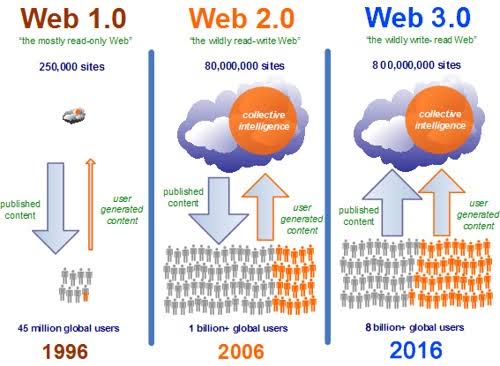
Let us have a look at the top 10 web 3.0 terms every tech enthusiast should be aware of.We are all aware of the World Wide Web. In this context, one term that has been doing rounds for quite some time is that of Web 3.0. This is the third-generation internet, the next evolution of the World Wide Web. Web 3.0’s dynamic and interactive nature is what made it increasingly popular across the globe. With so much buzz about Web 3.0 going around, being aware of the various terminologies pertaining to the same is important. On that note, let us have a look at the top 10 webs 3.0 terms every tech enthusiast should be aware of. Web 1.0This is the first stage of the World Wide Web that is characterized as a read-only web experience. Here, the users can read the information on web pages. A point to note is that Web 1.0 doesn’t have any search engine. All in all, Web 1.0 content is static and hyperlinked together. Web 2.0Web 2.0 is the second stage of the world wide web that is characterized as the read-write web experience which means that the users can read and write content on websites and applications and distribute it between sites. It is also known as the social Web as it facilitates interaction between users and sites. Web 2.0 Web 3.0Web 3.0 has gained recognition as the upcoming third generation of the internet. What makes web 3.0 stand apart from the rest is the fact that here, websites and apps will be able to process information in a smart human-like way. Wondering how? Well, that’ll be done through technologies like machine learning (ML), Big Data, decentralized ledger technology (DLT), etc. here, the users can sell or trade their data without losing ownership. A unique feature of web 3.0 is the digitization of assets via tokenization.TokenizationTokenization is nothing but converting assets and rights into a digital representation, or token, on a blockchain network. The tokens are quite similar to non-fungible tokens. Non-fungible tokensA non-fungible token is a non-interchangeable unit of data stored on a blockchain. This token stands the potential to be sold and traded. BlockchainA blockchain is a digitally distributed, decentralized structure that stores transactional records (blocks), of the public in several databases (called chains) in a network. The specialty of blockchain technology is that it achieves decentralized security and trust. UbiquityTalking about the features of web 3.0, there are four main features in particular. Ubiquity is one among them. Simply put, ubiquity is nothing but – “omnipresent”. In other words, web 3.0 makes the internet accessible to everyone at any point in time. Semantic webYet another unique feature of web 3.0 is – the semantic web. This feature enables computers to analyse loads of data from the Web. Semantics in the context of the worldwide web would enable machines to decode meaning and emotions by analysing data. Artificial intelligence (AI)Artificial intelligence is quite a common term these days. Web 3.0 employs that form of AI in which Web 3.0 machines can read and decipher the meaning and emotions conveyed by a set of data. Spatial web and 3D graphicsIt is believed that web 3.0 stands the potential to blur the line between the physical and the digital by revolutionizing graphics technology. All this thereby brings into clear focus three-dimensional (3D) virtual worlds.
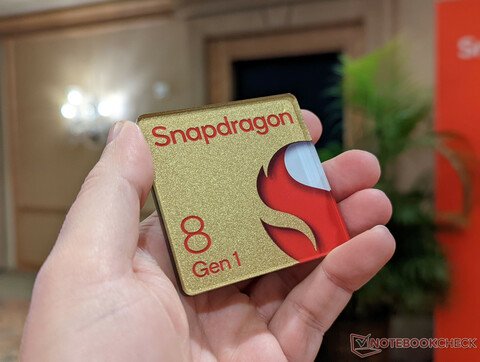
Qualcomm is geared to refresh the Snapdragon 8 Gen 1 with the improved Snapdragon 8 Gen 1 Plus. This new chipset will debut in the coming months, and a new leak has now provided some insight into what to expect.
According to Yogesh Brar, the Snapdragon 8 Gen 1 Plus, internally coded as the SM8475 versus the Snapdragon 8 Gen 1’s SM8450, is expected to be commercially available in early June. Prior reports claimed the chipset would debut in May, so there’s a chance Qualcomm launches the SoC in May, while the first Snapdragon 8 Gen 1 Plus-powered phones arrive in June.
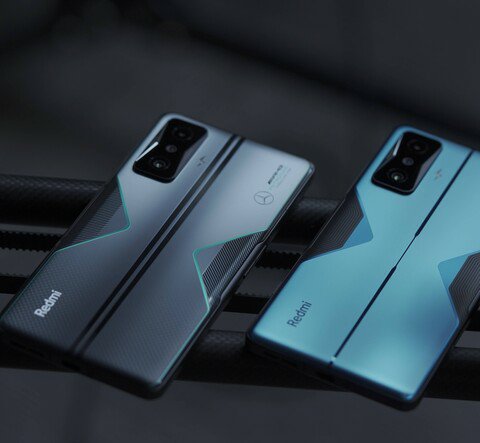
The Poco F4 GT will makes its global debut on April 26. The phone’s pricing has now leaked ahead of launch, and it looks to be a lot more expensive than the device it’s essentially a rebadge of—the Redmi K50 Gaming Edition. It comes with Flagship 4nm Snapdragon® 8 Gen 1 Smart 120W HyperCharge 120Hz flat AMOLED display





 TechTrue 20